Labelling AI Content and the EU AI Act
Labelling AI Content is now a legal requirement under the EU AI Act.
Product managers and compliance leads will soon need to implement processes for transparent AI, ethical AI, and metadata assignment.
Label Generative AI and Synthetic Media Output with TikBox
Passed in June 2024, the EU AI Act introduces phased-in duties for anyone building or integrating generative artificial intelligence. From February 2025, providers must label AI-generated content; by August, they must publish summaries of copyrighted training material.
Learn how TikBox can label your AI generated data in response to requirements outlined in the EU AI Act.
How to Label AI Content with TikBox

Upload Content
Upload your AI generated content either as single files or bulk content.

Select AI Generation Engine
Next, select which AI generation tool was used to generate the image, if known. In the future TikBox will automatically detect AI generated images- and there will no need to manually select.

Press Continue
Then, if you chose labelling without a licence, click ‘Continue’ to process your images with the selected GenAI labelling.
Labelling AI and Synthetic Content
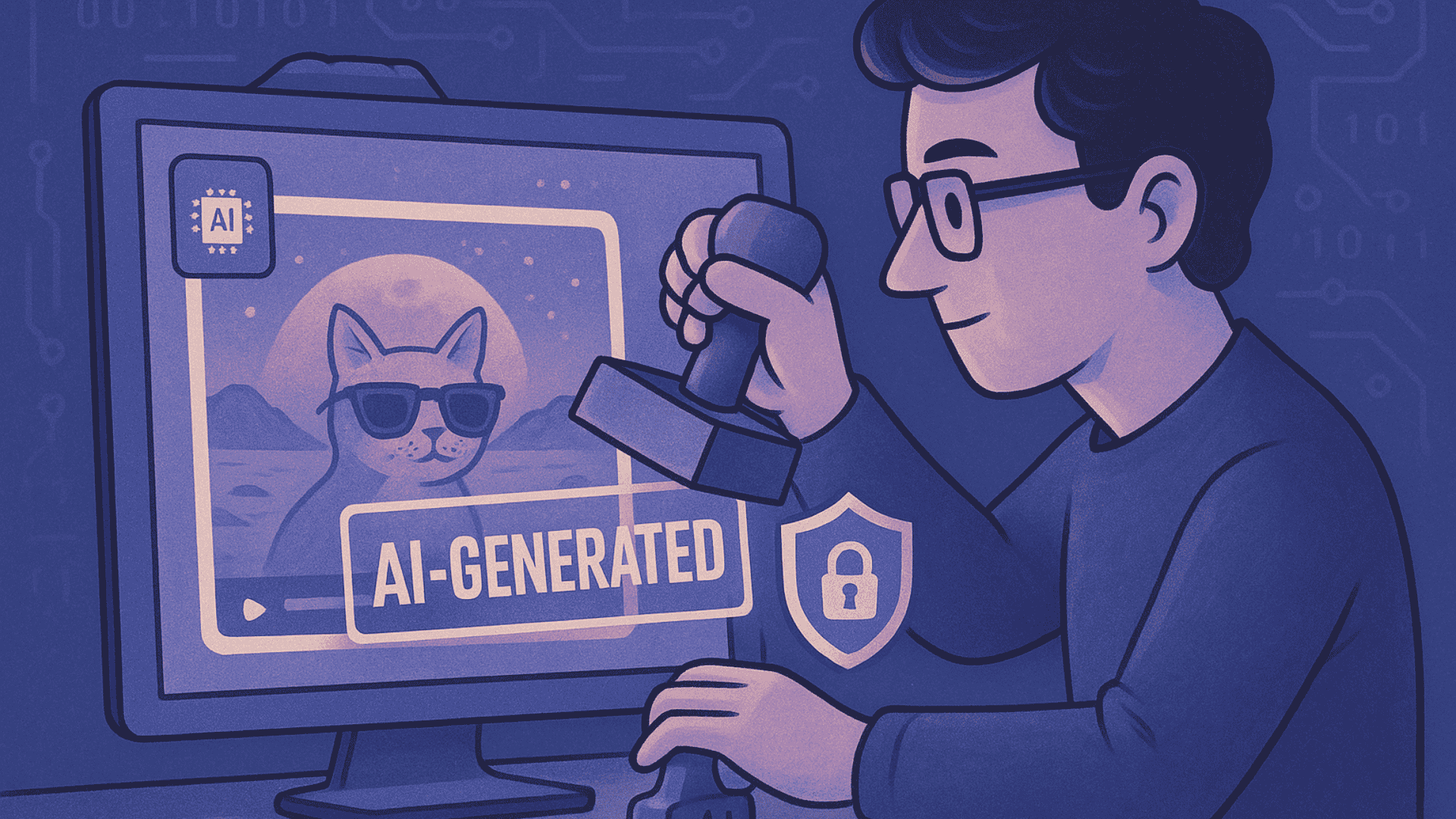
Add watermarks securely to show you created content using AI.
Article 52 of the EU AI Act requires clear disclosure and, where possible, watermarking of synthetic images, audio, or video. TikBox injects a watermark and digitally signs metadata and media claims using cryptographic signatures.
This meets the Act’s requirements without hurting media quality. The system embeds the watermark as metadata, making it impossible to tamper with without breaking the signature.
Add Metadata to Show Provenance
TikBox embeds a cryptographic watermark and JSON LD (Linked Data) provenance block while the image is processing, meeting the requirements of the EU AI Act without damaging the quality of the online asset.
The TikBox JSON-LD structure describing provenance labels includes: creator identity, actions taken (e.g., captured, edited, exported), Generative AI tools used (e.g., Dall-E, Firefly, etc), timestamps, and the TikBox.io Ltd signature.


Labelling AI content as a part of MLOps
Labelling AI-generated content plays a key role in MLOps and fulfils legal duties under the EU AI Act. European compliance leads must label AI outputs and gather data ownership details, from watermarking to publishing training data summaries.
TikBox simplifies running these tasks so that developers can take advantage of: centralised ingestion, AI-assisted tagging, and clear documentation for auditors.
Start implementing transparent AI practices today to ensure your company stays trustworthy and uses AI responsibly.
Integrate AI Labelling in MLOps
Label AI Generated Content video tutorial
Try Online Audio editor
Hit the button!!!

Labelling AI Content FAQ’s
What’s the risk of not labelling AI-generated content under the EU AI Act?
Failing to label AI-generated content is non-compliant and can lead to significant penalties. The EU AI Act includes a tiered enforcement model where breaches related to transparency (like unlabeled synthetic media) may result in fines of up to €15 million or 3% of global annual turnover, whichever is higher.
It also exposes companies to reputation damage, platform bans, and the risk of being classified as a high-risk AI provider under the Act.
Can I label AI content after publication? Is retroactive compliance allowed?
While the Act does not require retroactive labelling of legacy content, it strongly encourages providers to update existing AI-generated assets, especially in public-facing platforms. TikBox supports batch processing and retroactive watermarking depending on where the asset is saved, allowing organisations to bring past content into compliance with minimal friction.
What makes TikBox’s watermarking and metadata legally credible?
TikBox uses cryptographically signed metadata, which creates a verifiable chain of custody. Each piece of synthetic content is:
- Watermarked invisibly
- Signed using public-key infrastructure (PKI)
- Traceable through JSON-LD provenance standards
How does TikBox differentiate between human-edited and AI-generated content?
No. TikBox’s watermark is invisible, embedded at the metadata level, and backed by cryptographic signatures. It doesn’t alter the image or audio-visually and is resistant to tampering, ensuring compliance without degrading user experience.
Is TikBox compliant with global regulations beyond the EU AI Act?
Yes. TikBox is designed to meet the needs of multiple jurisdictions. Its architecture aligns with:
- US Executive Order on AI (2023), which calls for synthetic media disclosure
- UK’s AI Transparency Guidelines
[elementor-template id=”5610″]